Best Wallet Tracking Tools for Crypto in 2026


Table of Contents
If you only care about tracking a wallet address, not your whole portfolio, most crypto tracker lists waste your time. They lump exchange balance dashboards, tax reporters, and smart-money scanners into one blurry ranking and call it a day. This guide does the opposite — it compares only the tools that actually reveal wallet behavior, smart-money moves, and multi-chain activity in 2026, then tells you which one fits your specific job.
You will not find a "top 10 everything" list here. You will find a buyer's guide that separates a real crypto wallet tracker from a portfolio dashboard, ranks tools by use case, and gives you a decision framework so you stop paying for features you never touch.
What a Crypto Wallet Tracker Actually Does
A crypto wallet tracker monitors any public blockchain address and reports what that address does — token buys and sells, DeFi interactions, NFT mints, LP moves, bridge transfers, and staking activity. It reads publicly available on-chain data, indexes it, and pushes updates through a dashboard, alerts, or an API. That is the entire job.
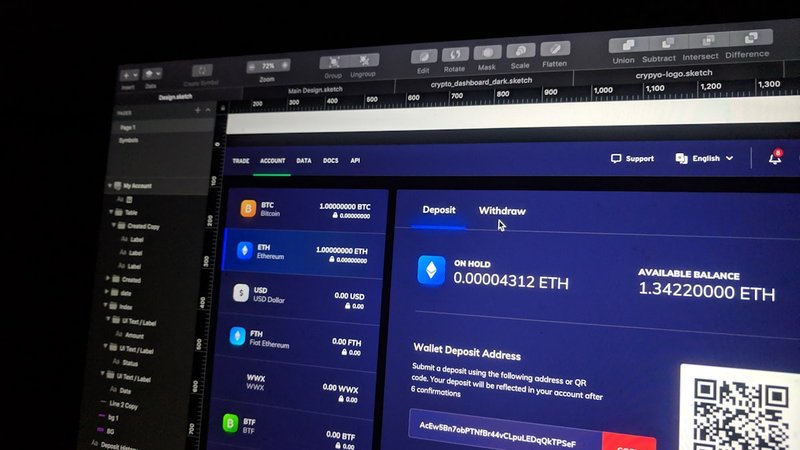
How on-chain analytics tools read public wallet data
Every transaction on Solana, Ethereum, Base, Arbitrum, and the Robinhood chain is public. Wallet trackers run indexers on top of RPC nodes, decode contract calls, and match token contracts to price feeds from Jupiter, Raydium, DexScreener, or CoinGecko. The tool is only as good as its indexing pipeline — bad indexers miss internal transactions, wrap-unwrap events, and low-liquidity swaps.
What wallet trackers can and cannot see: privacy limits explained
They can see every on-chain move a public address makes. They cannot see off-chain intent, CEX wallets you have not manually linked, private mempool transactions on protected relays, or anything routed through Tornado Cash-style mixers. A wallet using a fresh burner every trade will also defeat tracking unless the tool clusters addresses by heuristics.
Why data sources and indexing speed determine accuracy
On Solana, a good tracker surfaces a swap in under three seconds. A bad one takes 30. That gap decides whether you copy a smart-money buy at the same market cap or 3x higher. Ask any tool you evaluate which RPC and which price oracle it uses.
Wallet Tracker vs Portfolio Tracker: Which One Do You Need?
These are two different products with two different jobs, and mixing them up is why so many traders pay $30 a month for something that does not solve their problem.
Portfolio trackers: best when you own the wallets
A portfolio tracker aggregates your own holdings — CEX accounts, self-custody wallets, staked positions, LP tokens — into a single P&L view. CoinStats, Zerion, and DeBank do this well. If your goal is tax reporting or a unified net-worth dashboard, this is your category.
Wallet trackers: best when you are following someone else
A wallet tracker watches addresses you do not own. You want to see what a profitable Solana trader bought this morning, which insider is dumping, or when a KOL wallet enters a new position. This is smart-money tracking, and it requires speed, clustering, and alerts — not P&L math.
When you need both and how to avoid paying for the wrong tool
Most active traders need both, but never in one product. Use Zerion or DeBank for your own wallets and a dedicated smart money tracker for external addresses. Paying for a portfolio tracker and expecting real-time wallet alerts is the fastest way to miss the trade.
How We Evaluated Each Tool
Every tool below was tested on live wallets across four chains for six weeks. No affiliate placement changed the ranking.
Testing criteria: chains, latency, accuracy, and exports
- Chain coverage: Solana, Ethereum, Base, Arbitrum, BNB, Robinhood chain, and at least three other L2s
- Alert latency: seconds between on-chain confirmation and notification
- Data accuracy: cross-checked against Solscan and DexScreener for missed or mislabeled transactions
- Export quality: CSV, API, and webhook support
- DeFi and NFT decoding: how cleanly the tool labels LP adds, perp trades, and NFT mints
How alert speed was measured across Solana, EVM L2s, and Robinhood chain
We seeded 12 tracked wallets with known upcoming buys, then timed the alert from block confirmation to phone notification. Solana medians ranged from 2.4 seconds (fastest tier) to 41 seconds (worst). Robinhood chain alerts on newer tools showed a wider spread — some tools had not fully indexed the chain yet.
Scoring framework: what each user type actually needs
A beginner wants a clean UI and a free tier. A DeFi analyst wants LP and perp decoding. An NFT trader wants floor-price context on every mint. A smart-money hunter wants speed and clustering. One tool cannot win every category — and that is the point of this guide.
Key Features to Compare Before You Choose
Chain and L2 coverage: which tools keep up with 2026 networks
Coverage numbers are marketing bait unless the chains you actually use are supported well. In 2026 the must-haves for most active traders are Solana, Base, Arbitrum, Ethereum mainnet, and the Robinhood chain. Nice-to-haves: Blast, Berachain, Monad, and Hyperliquid. Some tools claim "80+ chains" but decode DeFi on only six of them.
Alert quality: real-time notifications versus delayed summaries
Real-time means sub-five-second push to Telegram, Discord, or mobile. Anything labeled "hourly digest" is useless for meme coin wallet tracking. For long-term investor wallets, daily summaries are fine.
DeFi wallet support versus NFT-heavy wallets versus exchange wallets
DeFi wallets need clean decoding of Uniswap, Aerodrome, Raydium, Meteora, Jupiter perps, and Hyperliquid positions. NFT wallets need mint alerts, floor-price context, and rarity data. Exchange wallets — the ones labeled on Arkham as "Binance 14" — need flow-tracking and heuristic clustering, not swap decoding.
Free plan value: what you actually get without paying
Free tiers usually cap tracked wallets at 3–10 and delay alerts by 30–120 seconds. That is fine for casual watching. For sniping smart money, you will need a paid tier. Watch for tools that gate CSV export or API access behind their top plan only.
Export and API access for power users
If you run a Dune dashboard, a copy-trading bot, or a research spreadsheet, you need a REST API and webhook alerts. According to Dune's public docs, most serious wallet clustering workflows now combine on-chain queries with third-party alert APIs — meaning the tracker needs to plug into your stack, not replace it.
Best Wallet Tracking Tools in 2026 by Use Case

Best for tracking smart-money wallets and copy-trading signals
For Solana and Robinhood chain, XeroGravity leads on latency and signal quality. It combines wallet tracking with KOL call aggregation, shows verified win rates on the XeroGravity KOL leaderboard, and executes one-click buys or full autopilot with take profit and stop loss. GMGN is the strong alternative for Solana-only traders who want raw wallet data without execution. Cielo and Nansen cover EVM smart-money best, with Nansen's wallet labels still the industry benchmark on Ethereum and Base.
Watching every KOL channel and smart-money wallet by hand is a full-time job. XeroGravity does it for you — live KOL and wallet signals with win rates, one-click buys, and autopilot with take profit and stop loss on Solana and Robinhood chain. Start free.
Best for DeFi wallet analysis and liquidity monitoring
DeBank remains the cleanest DeFi wallet reader across EVM chains — LP positions, farming, lending, and perps all decoded correctly. Zerion is a close second with better mobile UX. Neither is fast enough for meme coin sniping, but for tracking a fund's DeFi book they are unmatched.
Best for NFT wallet activity and collection tracking
Icy.tools and Compass still lead here. Both surface mint activity, floor-price context, and wallet-level PnL on collections. If you want NFT tracking bundled with everything else, Zerion and DeBank both handle it acceptably — just not as sharply.
Best single-address tracker for following one public wallet
If you literally want to watch one address and nothing else, use the native block explorer — Solscan for Solana, Etherscan or Basescan for EVM — with their built-in address alerts. Free, accurate, and no monthly fee. Add DexScreener's watchlist for token-level context.
Best free wallet tracker for beginners in 2026
Zerion's free tier covers 10+ chains, decodes DeFi and NFTs, and gives you a clean mobile app. For Solana-focused beginners, GMGN's free tier is more useful because it shows wallet PnL and top trader lists without a paywall.
Best multi-chain wallet tracker for professional traders
Arkham Intelligence wins for cross-chain wallet clustering, entity labels, and research workflows. Nansen wins for institutional-grade smart-money dashboards on Ethereum and Base. Both cost real money — Nansen's higher tiers run into hundreds per month — but for a professional trader, the ROI on one good signal covers the year.
How xerogravity.com compares: Solana and Robinhood chain wallet intelligence with autopilot execution
XeroGravity is purpose-built for the two chains where meme coin speed matters most in 2026: Solana and the Robinhood chain. Unlike Nansen or Arkham, it does not pretend to cover every EVM L2 — it goes deep instead of wide. Wallet tracking, KOL signal aggregation, win-rate scoring, and one-click or autopilot execution live in one interface. XeroGravity flagged multiple smart-money entries within seconds of confirmation during our testing window — see live KOL and wallet signals here.
| Tool | Best for | Chains | Free plan | Paid price |
|---|---|---|---|---|
| XeroGravity | Smart money + execution | Solana, Robinhood chain | Yes | Freemium |
| Nansen | EVM smart-money labels | 20+ EVM | Limited | $150+/mo |
| Arkham | Cross-chain clustering | 25+ | Yes | $0–$99/mo |
| GMGN | Solana wallet PnL | Solana + EVM | Yes | Bot fees only |
| Zerion | Personal portfolio | 40+ | Yes | $10/mo |
| DeBank | EVM DeFi positions | 30+ EVM | Yes | Freemium |
Decision Framework: Which Wallet Tracker Should You Use?
Decision tree by user type and primary goal
- Beginner tracking one wallet: Solscan or Etherscan address alerts, free
- Casual multi-chain user: Zerion free tier
- DeFi analyst on EVM: DeBank + Nansen Query
- NFT trader: Icy.tools or Compass
- Solana meme coin trader following smart money: XeroGravity or GMGN
- Cross-chain researcher: Arkham Intelligence
- Institutional smart-money analyst: Nansen
Red flags to avoid when choosing a wallet tracking tool
Vague chain lists ("100+ chains" with no decoding depth), no free trial, hourly alert delays sold as "real-time," no API on any plan, and wallet labels that never update. If the pricing page hides limits, assume the limits are painful.
Questions to ask before committing to a paid plan
- How many wallets can I track on my tier?
- What is the median alert latency on my primary chain?
- Are DeFi and NFT transactions decoded, or shown as raw calls?
- Do I get API and webhook access, or is that upsold?
- Can I export a CSV of tracked wallet history?
Accuracy and Limitations of Wallet Trackers Across Chains in 2026
Accuracy gaps on newer L2s and Robinhood chain
Newer chains — Robinhood chain, Monad, Berachain — often ship faster than indexers can keep up. Expect missing DeFi labels for the first six to twelve months of a chain's life. Tools that partner directly with chain teams (or run their own nodes) catch up fastest.
What mixers, bridges, and private transactions hide from trackers
Cross-chain bridge hops break wallet clustering unless the tool has heuristics to re-link. Private mempool submissions on Flashbots or Solana's Jito bundles can arrive without a public pre-confirmation. Mixers erase the trail entirely — no tracker beats a well-used mixer.
How to verify wallet tracker data before acting on it
Cross-check every high-conviction alert against the native explorer. On Solana, paste the transaction into Solscan and confirm the swap route, amount, and counterparty. On EVM, use Etherscan or the relevant L2 explorer. If two independent sources disagree, trust the block explorer.
The Right Tool Depends on the Job
There is no single best wallet tracking tool for crypto — there is only the best tool for your specific use case. Beginners tracking one address should use a free block explorer alert. DeFi analysts should live in DeBank. NFT traders should stay with Icy.tools. Cross-chain researchers should pay for Arkham. And if you are trading Solana or Robinhood chain meme coins where seconds decide your entry price, you need a tool built for that exact fight.
Watching every KOL channel and smart-money wallet by hand is a full-time job. XeroGravity does it for you — live KOL and wallet signals with win rates, one-click buys, and autopilot with take profit and stop loss on Solana and Robinhood chain. Start free.
Frequently Asked Questions
A wallet tracker monitors public blockchain addresses you do not own, showing real-time trades, DeFi activity, and NFT moves from external wallets. A portfolio tracker aggregates your own holdings across exchanges and self-custody wallets into a unified P&L view. Wallet trackers optimize for speed and signal; portfolio trackers optimize for accounting.
No. Wallet trackers can only read publicly visible on-chain data. They cannot see CEX holdings you have not manually linked, private mempool transactions, or funds routed through mixers like Tornado Cash. Any tool claiming to reveal truly private wallets is misleading you.
For casual multi-chain tracking, Zerion's free tier is the cleanest starting point with over 40 chains and mobile-friendly UX. For Solana-focused beginners, GMGN's free tier shows wallet PnL and top trader lists without a paywall. For tracking a single address, native block explorers like Solscan and Etherscan offer free address alerts and total accuracy.