Copy Trading Solana: The Complete Risk-Aware Guide

Table of Contents
Copy trading Solana is not about copying winners. It is about copying the right wallet, at the right speed, with the right risk controls. Get any one of those three wrong and you will underperform the wallet you are mirroring — often by a wide enough margin to turn a 3x trade into a break-even exit or a stop-out.
Most people who lose money on Solana copy trading did not copy losing wallets. They copied wallets that were already at the peak of a lucky streak, or they copied fast snipers with slow bots, or they allocated 20% of their account to a single mirrored trade with no stop. This guide walks through the full stack: how to vet smart money wallets, how to set up a copy trade bot without getting front-run by your own copies, and how to size positions so a bad week does not end your account.
What Copy Trading on Solana Actually Means
Solana copy trading means your wallet automatically or manually replicates the buys and sells of a target wallet on-chain. When the target buys a token, your bot detects the transaction, decodes the swap route, and fires an identical trade from your wallet within milliseconds. You are not receiving a signal from a Telegram group. You are watching raw on-chain behavior and mirroring it.
On-chain mirroring versus centralized copy trading platforms
Centralized copy trading (think CEX-style follower systems) routes your trades through a custodian and matches them internally. On-chain mirroring on Solana keeps funds in your own wallet — the bot simply signs and submits transactions using your keys or a delegated session key. You get self-custody and access to every Pump.fun, Raydium, and Meteora token the second it lists. You also inherit every execution risk that comes with real on-chain trading.
How a copy trade bot detects and replicates a target wallet's transactions
A Solana copy trade bot subscribes to a Geyser or Yellowstone stream, filters for the wallet addresses you added, parses the swap instruction, and rebuilds it with your parameters (position size, slippage, priority fee). The whole loop, from target confirmation to your transaction landing, usually takes 300ms to 2 seconds depending on RPC quality and priority fees.
Manual mirroring: when it works and when it falls apart
Manual mirroring works if you are copying swing traders who hold positions for hours or days. Watch the wallet on GMGN or Cielo, buy when they buy, sell when they sell. Manual mirroring collapses instantly if you try to copy a sniper who exits inside 90 seconds — by the time you tap the buy button, they are already selling into your fill.
How to Find a Wallet Worth Copying
This is where 80% of copy traders fail. They find a wallet on a leaderboard that shows +840% PnL over 30 days, hit copy, and blow up two weeks later because that wallet caught one god-tier trade and everything else was noise.
Key metrics to evaluate: ROI, win rate, average holding time, and trade frequency
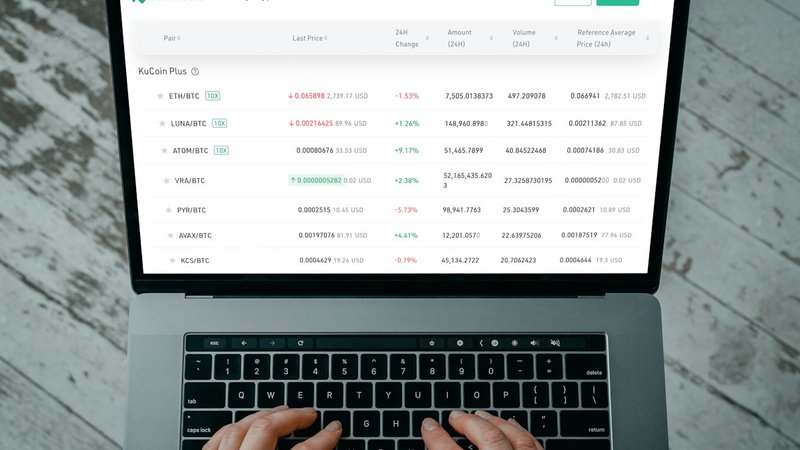
Look at these numbers on GMGN, Cielo, or Birdeye before you copy anything:
- ROI over 30 and 90 days — 30-day ROI alone lies. A wallet up 400% on 30 days but flat on 90 caught one narrative.
- Win rate — 45-65% is realistic for a good sniper. Anything above 80% is either wash trading or a wallet that only reports winners.
- Average holding time — tells you if you can even copy this wallet. Under 5 minutes means you need a fast bot. Multi-hour holds are manually copyable.
- Trade frequency — 5-30 trades per day is normal for an active trader. 200+ trades per day is a bot farm and you will get chopped up on fees.
How to spot a lucky streak versus a sustainable edge
Pull the wallet's full trade history and remove its top 3 winners. Look at the ROI without them. If a wallet is +600% over 90 days but drops to +40% without its three best trades, that is not an edge — that is variance. A sustainable wallet still shows a positive curve after you delete its outliers, because it wins consistently on 50%+ of trades with tight losses.
Red flags: wash trading, low-liquidity tokens, and insider-style timing
Check the tokens the wallet traded. If 60% of their PnL comes from tokens with under $50k liquidity, you cannot replicate that — your copy will move the price against you. If a wallet consistently buys tokens 30-60 seconds before major KOL calls hit Twitter, that is insider flow. It is profitable for them but dangerous to copy because you land after both the wallet AND the KOL crowd.
Wallet archetypes compared: snipers, swing traders, and smart money accumulators
| Archetype | Hold time | Copy difficulty | Best execution method |
|---|---|---|---|
| Sniper | 30s - 5min | Very hard | High-speed bot, priority fees |
| Swing trader | 2-48 hours | Easy | Bot or manual |
| Smart money accumulator | Days to weeks | Easy | Manual mirroring works fine |
Tools for wallet tracking and historical performance analysis in 2026
GMGN and Cielo remain the standard for wallet PnL breakdowns. Birdeye's wallet analyzer covers historical positions with entry and exit prices. DexScreener helps you sanity-check liquidity on every token the wallet touched. For real caller and wallet win rates over long lookbacks, you can check the XeroGravity KOL leaderboard.
Best Solana Copy Trading Tools and How They Differ
Not every Solana copy trade bot is built for the same job. Some are optimized for sniping new launches with sub-second latency. Others are built for tracking dozens of smart money wallets across longer timeframes.
Automated copy trade bots: features, latency, and reliability compared
The main tradeoffs across bots are latency, execution reliability, fee structure, and how customizable the risk parameters are. Bots that co-locate with premium RPCs (Helius, Triton, Jito) will consistently land trades 200-500ms faster than bots running on public RPCs. That gap is the difference between entering a Pump.fun token at $40k market cap or $90k.
xerogravity.com: real-time KOL call tracking and autopilot execution on Solana
XeroGravity streams live KOL calls and smart money wallet activity with attached win rates, so you can see whether a caller or wallet is actually profitable before you mirror anything. Autopilot mode lets you attach take profit and stop loss to every copied trade — critical for snipers who exit fast and leave manual traders holding bags.
When to use a bot versus manual mirroring for your trading style
Use a bot if the wallets you copy hold under 30 minutes or you are tracking more than three wallets simultaneously. Go manual if you are following 1-2 swing traders and want full control over entry price, slippage, and exit timing.
Watching every KOL channel and smart-money wallet by hand is a full-time job. XeroGravity does it for you — live KOL and wallet signals with win rates, one-click buys, and autopilot with take profit and stop loss on Solana and Robinhood chain. Start free.
Execution Realities: Latency, Slippage, and Failed Trades
Your copy will almost never fill at the same price as the target wallet. Understanding why is the difference between profitable and unprofitable mirroring.
Why your copy trade often executes at a worse price than the original
The target wallet's transaction lands in a Solana block. The next block is 400ms away. Your bot detects the transaction, builds and signs yours, and submits it — but you are now competing with every other copy bot watching the same wallet. If the target is a popular smart money wallet, 30+ other copies may land in the same block, driving the price up 5-15% before your transaction confirms.
Slippage settings: how to balance fill rate against price impact
For established tokens with $500k+ liquidity, 5-8% slippage is reasonable. For Pump.fun launches, you often need 15-25% just to fill. Set slippage too tight and you get a failed transaction (you still pay priority fees). Set it too loose and MEV bots sandwich you.
MEV, front-running, and how they affect Solana copy trade outcomes
Solana has MEV. Jito bundles let searchers reorder transactions within a slot, meaning a searcher can insert a buy before yours and a sell after, pocketing the difference. Using a bot that routes through Jito bundles with tips helps, but the real defense is trading tokens with enough liquidity that sandwich attacks are unprofitable.
Transaction failures on Solana: causes and how to reduce them
The three main causes: slippage too tight, priority fee too low, and stale blockhashes. Raise your priority fee to at least 0.001 SOL during congestion, use dynamic slippage, and use an RPC with fresh blockhash access. Expect a 5-15% fail rate on active copying — it is unavoidable.
How to Set Position Size, Slippage, and Risk Limits
Risk controls are what separate copy traders who compound from copy traders who blow up.
How much capital to allocate per copied trade without overexposing your account
Cap per-trade size at 5-10% of your copy trading bankroll. Test any new wallet with 0.1-0.5 SOL for at least 20 trades before scaling up. If a wallet does not clear +30% net after 20 test trades, drop it.
Setting max concurrent positions to limit correlated risk
Cap max concurrent positions at 5-8. Beyond that, you cannot monitor exits and you are exposed to correlated drawdowns when the whole meme market flushes 30% in an hour.
Stop conditions: when to pause or kill a copy on a single trade
Set a hard stop at -35% to -50% per position. Meme coins move fast — a -25% stop will get wicked out constantly. Set a take profit at 2x-3x with a trailing stop after that.
Portfolio-level drawdown limits and when to stop copying a wallet entirely
If your total copy trading account draws down 20%, pause all bots and audit. If a specific wallet you copy loses 5 trades in a row or drops below -15% over 20 trades, stop copying it — it has entered strategy decay.
Common Mistakes That Turn Copy Trading Into Loss-Chasing
Every mistake below is preventable with a checklist.
Copying a wallet after its best run is already over
Leaderboards surface wallets that just had monster weeks. That is exactly when their edge is most likely to decay — the narrative they traded is over, the tokens they bought are distributed, and the crowd is now copying them, ruining their own fills.
Ignoring strategy decay: when a previously profitable wallet stops working
Every wallet's edge decays. Meta shifts, competitors copy the strategy, or the trader gets sloppy after a big win. Review each copied wallet's rolling 14-day performance weekly.
Over-concentration: copying too few wallets or too similar wallet types
Copying one wallet is not a strategy — it is a bet on one person. Copying five snipers means one bad meta wipes all of them at once.
How to recognize when it is time to stop copying a wallet and switch strategies
Three signals: rolling 14-day PnL turns negative, average trade PnL drops below your fee threshold, or the wallet starts trading tokens outside its historical liquidity range. Any one of those and you pause. Two of them and you drop the wallet.
Final Take
Solana copy trading rewards process, not enthusiasm. The traders who compound quarter after quarter are not the ones with the flashiest bots — they are the ones who vet every wallet with a checklist, size every trade the same way, and cut wallets the moment performance decays. Skip wallet vetting and you are copying variance. Skip execution optimization and you are always landing at worse prices. Skip risk controls and one bad week ends the account.
Build all three pillars and copy trading becomes one of the highest-leverage strategies available on Solana in 2026.
Stop guessing which wallets and callers are actually profitable. XeroGravity shows you live KOL and smart-money signals with real win rates, one-click execution, and autopilot with TP and SL on Solana and Robinhood chain. Start free.
Frequently Asked Questions
Yes, but only if you vet wallets carefully, use a fast bot with low latency, and enforce strict position sizing and stop losses. Most copy traders lose money because they pick wallets from short-term leaderboards and skip risk controls, not because copy trading itself is unprofitable.
Filter on GMGN or Cielo for wallets with 90-day ROI above 100%, win rate between 45-65%, at least 100 trades, and average trade size within your copy range. Remove the wallet's top 3 winners and check if the remaining ROI is still positive — that separates real edge from lucky streaks.
Start with 2-5 SOL in a dedicated copy trading wallet, allocating 0.1-0.5 SOL per trade across 3-5 vetted wallets. This lets you complete 20+ test trades per wallet without risking meaningful capital, and gives you enough data to identify which wallets are actually worth scaling.