
Crypto Sentiment Analysis Tools: Buyer's Guide


Sentiment data is everywhere. Most of it is noise, manipulation, or already priced in by the time your dashboard refreshes. The job of a serious trader is not to consume more sentiment — it's to filter it. This guide shows you exactly when a crypto sentiment analysis tool earns its keep, when it lies to you, and how to plug it into a workflow that produces actual edge instead of confirmation bias.
You'll get a framework for evaluating tools, a breakdown of which data sources matter, the failure modes nobody mentions, and a practical playbook for combining sentiment with price, volume, and on-chain signals.
What Is a Crypto Sentiment Analysis Tool?
A crypto sentiment analysis tool measures the collective mood of the market by scraping text and behavioral data — tweets, Reddit threads, news headlines, forum posts — and converting that mess into a numerical score. The goal is simple: tell you whether traders are euphoric, fearful, or somewhere in the middle, before that emotion fully translates into price.
Sentiment Scores Explained: Fear, Greed, Bullish, and Bearish Metrics
Most tools output a 0–100 score (Fear & Greed style) or a polarity rating from bearish to bullish. Some break it down further — euphoria, FUD, anger, doubt. The number itself is useless without context. A bullish score of 80 during a parabolic move means crowd capitulation to upside, often a sell signal. The same 80 after three weeks of sideways grind means something completely different.
How Sentiment Tools Differ From Price Indicators and On-Chain Data
Price indicators tell you what already happened. On-chain data shows what holders are doing with their coins. Sentiment tools show what people are saying — which often diverges from both. That divergence is the entire point.
Who Uses Crypto Sentiment Analysis and Why It Matters
Day traders use it for reversal timing. Swing traders use it for narrative confirmation. Funds use it to gauge retail positioning before unwinding. If you ignore sentiment entirely, you're trading half blind in a market where narrative drives 70% of altcoin moves.
How Crypto Sentiment Tools Work
Under the hood, every sentiment platform runs a pipeline: ingest raw text, classify it, weight it, aggregate it, and output a score. The quality of each step determines whether the final number is a signal or garbage.
Natural Language Processing and Text Classification in Crypto
Crypto language is brutal for off-the-shelf NLP models. "Bullish" gets sarcasm flipped. "Wagmi," "ngmi," "rekt," and "ser" don't exist in standard training corpora. Tools that fine-tune transformer models on crypto-native text (Augmento built its classifier this way) handle nuance far better than generic sentiment APIs slapped onto a Twitter firehose.
Weighted Aggregation: Volume, Reach, and Source Credibility
A tweet from an account with 2 million followers should not count the same as one from a three-day-old account with a frog avatar. Quality tools weight by follower count, engagement, account age, and historical credibility. Tools that don't weight properly get gamed by bot armies within hours of a token launch.
Real-Time vs Lagging Sentiment Pipelines and Why Latency Matters
If your sentiment dashboard updates every 4 hours, you're seeing a fossil. Price moves first, sentiment catches up, and your "signal" is just a reflection of yesterday's chart. Demand sub-15-minute refresh windows. For day trading, sub-minute is the standard.
Best Data Sources for Reliable Sentiment Signals
Not all data sources are equal. Some are loud and useful, some are loud and toxic, and a few are quiet but lethal in accuracy.
X and Reddit: High Volume but High Noise and Bot Risk
X (formerly Twitter) is the loudest sentiment source and the most manipulated. Coordinated shilling campaigns can spike a token's sentiment score by 300% in under an hour. Reddit (r/CryptoCurrency, r/Bitcoin, asset-specific subs) is slower but cleaner — moderation kills most spam, and longer-form posts reveal genuine conviction. Use both, but trust Reddit more for swing-trade narratives and X for intraday spikes.
Crypto News and Press: Faster Catalysts, Lower Spam Rate
Headlines from CoinDesk, The Block, and Bloomberg crypto move price within minutes. News-based sentiment is far harder to manipulate and tends to lead social chatter by 10–30 minutes on major catalysts. If your tool doesn't ingest news, you're missing the cleanest signal in the stack.
On-Chain Signals as Behavioral Sentiment Proxies
Exchange inflows, stablecoin supply ratios, and long/short funding rates are sentiment in action. Glassnode and CryptoQuant data often confirm or contradict social sentiment in ways that expose manipulation. When social sentiment is euphoric but exchange inflows are spiking, retail is being set up.
Emerging Sources: TikTok, Telegram, and Discord Coverage Gaps
Most legacy tools ignore TikTok and Telegram. That's a mistake. Research integrating TikTok and X sentiment improved short-term forecasting accuracy by up to 20%, and TikTok-specific sentiment improved Dogecoin short-term predictions by 35%. Telegram and Discord drive 80% of early altcoin pumps and are almost entirely uncovered by mainstream tools.
How to Choose the Right Crypto Sentiment Tool
Forget marketing pages. Evaluate every tool against the same hard criteria, then match it to your trading style.
Key Evaluation Criteria: Coverage, Latency, Asset Depth, and Usability
- Coverage: How many sources? Is news included? Are TikTok and Telegram covered?
- Latency: How fast does sentiment update? Sub-minute, sub-15-minute, or hourly?
- Asset depth: BTC and ETH only, top 50, or 300+ coins?
- Methodology transparency: Do they publish how scores are calculated?
- Historical data: Can you backtest sentiment signals against price?
- API access: Critical if you're building systematic strategies.
Best Sentiment Tools for Day Traders vs Swing Traders vs Long-Term Investors
| Trader Type | Priority Features | Avoid |
|---|---|---|
| Day trader | Sub-minute latency, X + news, alerts | Hourly aggregates, no real-time feed |
| Swing trader | Reddit + news + on-chain confluence | X-only tools with no weighting |
| Long-term investor | Historical data, narrative tracking, broad coverage | High-frequency dashboards built for scalpers |
Red Flags: Opaque Methodology, Limited Asset Coverage, and Stale Data
If a tool can't tell you which sources it scrapes, walk. If it covers only BTC and ETH but charges premium fees, walk. If its "real-time" data is more than 30 minutes stale, walk. Augmento publishes coverage across X, Reddit, and Bitcointalk with 93 topics across 25+ assets. StockGeist claims real-time monitoring for over 350 cryptocurrencies. Both disclose methodology — that's table stakes.
Comparing Leading Tools: Feature and Signal Quality Breakdown
| Tool | Coverage | Best For |
|---|---|---|
| Augmento | 25+ assets, 93 topics, X/Reddit/Bitcointalk | Quant research, API users |
| StockGeist | 350+ cryptos, real-time | Broad altcoin scanning |
| LunarCrush | Social + influencer weighting | Narrative-driven swing trades |
| Santiment | Social + on-chain blended | Confluence-based trading |
Tired of cross-referencing five sentiment dashboards before every trade? XeroGravity blends sentiment, price action, and on-chain signals into clean AI-powered alerts with entry, TP, and SL levels. Explore the dashboard.
When Sentiment Works and When It Fails
Sentiment is not a standalone signal. It's a contextual one. Knowing when it leads price and when it lags is the difference between an edge and a tax.
High-Probability Sentiment Setups: Extremes, Divergences, and Reversals
The most reliable sentiment trade is the extreme contrarian setup. Fear & Greed under 15 during a multi-week downtrend with declining sell volume has historically marked local bottoms within days. The same applies at 90+ readings near resistance. Divergences — price making new highs while sentiment fades — are the cleanest reversal signals you'll find.
Failure Mode 1: Bot-Driven Hype, Shilling, and Coordinated Pumps
Small-cap tokens get pumped via Telegram groups and bot networks. Sentiment scores can go vertical on a coin that has 12 real holders. Always cross-check sentiment volume against unique active accounts and follower quality. If a sudden bullish spike comes from 800 accounts created in the past 30 days, ignore it.
Failure Mode 2: Sentiment Lags Price in Fast-Moving Markets
During flash crashes or sudden squeezes, sentiment lags by 5–20 minutes. By the time the dashboard turns red, the move is half over. Real-time tools mitigate this but never eliminate it.
Failure Mode 3: Overfitting Signals to Recent Narrative Cycles
How to Use Sentiment With Price, Volume, and On-Chain Data
Sentiment alone has maybe a 52–55% hit rate. Sentiment plus price action plus volume plus on-chain pushes that into the high 60s. That's where the edge lives.
Building a Confluence Stack: Sentiment Plus Price Action Plus Volume
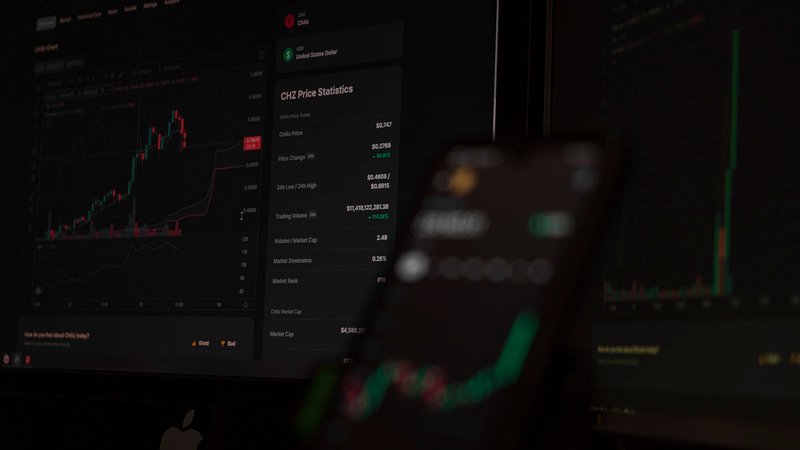
The basic stack: sentiment extreme + key technical level + volume confirmation. If BTC sentiment hits 12 (extreme fear), price retests the 200-day moving average, and volume on the bounce candle exceeds the 20-period average, that's a high-probability long.
Using On-Chain Data to Confirm or Contradict Sentiment Readings
Bullish social sentiment + rising exchange inflows = trap. Bearish social sentiment + stablecoin reserves climbing on exchanges = accumulation. According to CryptoQuant data, stablecoin exchange reserves often lead sentiment reversals by 2–5 days on BTC. Use it as a leading filter.
Practical Workflow: From Sentiment Alert to Trade Decision
How AI-Powered Platforms Like Xerogravity Integrate Sentiment Into Signals
Modern AI signal platforms don't show you a raw sentiment number and expect you to figure it out. They blend sentiment with technical confluence, volume profile, and on-chain flow, then output a trade with defined entry, TP, and SL. XeroGravity identified this exact type of fear-extreme-plus-confluence setup on BTC last week — view the signal result here.
No single crypto sentiment analysis tool gives you edge alone. Traders who win with sentiment do three things: they vet their data sources ruthlessly, they require confluence with price and on-chain signals before pulling the trigger, and they respect the failure modes — bot manipulation, latency, and narrative overfitting. Do those three things and sentiment becomes a real weapon. Skip them and it becomes expensive entertainment.
Scanning the market for setups like this manually takes hours. XeroGravity does it automatically — AI-powered signals with entry, take profit, and stop loss levels delivered to your dashboard in real time. Start free.
Frequently Asked Questions
There's no single best tool — it depends on your trading style. Augmento and Santiment lead for quant traders needing API access and on-chain blending. StockGeist covers 350+ coins for broad altcoin scanners. LunarCrush is strongest for narrative and influencer-driven swing trades. Match the tool to your time horizon and asset focus.
Standalone sentiment indicators typically hit 52–55% accuracy on directional moves. Combined with price action, volume, and on-chain data, that climbs into the mid-60s. Research integrating TikTok and X sentiment improved forecasting accuracy by up to 20% on certain assets, but no sentiment tool is reliable enough to trade on its own.
Sentiment can predict short-term moves when readings hit extreme levels or diverge from price, but it cannot reliably predict direction in trending markets. It works best as a confluence filter — confirming or contradicting signals from technical analysis and on-chain flows — not as a standalone forecasting tool.