Free Crypto Signals: Beginner's Guide to Legit Picks

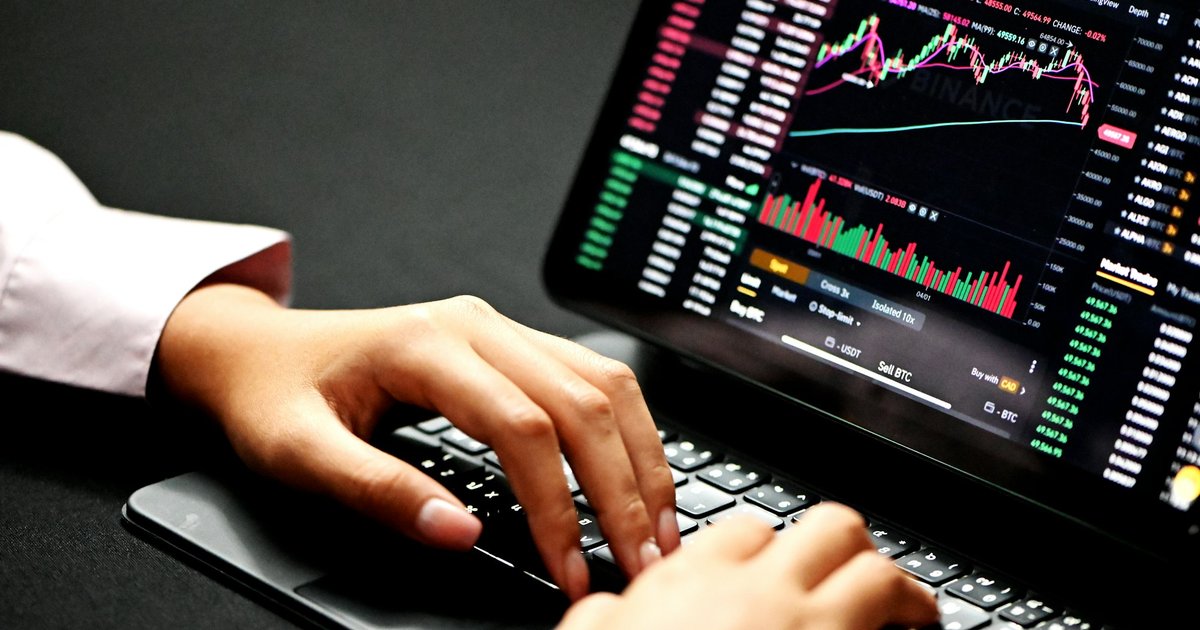
Most lists tell you where to find free crypto signals. This guide shows you how to tell, in under 5 minutes, whether a signal group is worth following before you risk a single trade.
There are thousands of free crypto signal channels on Telegram alone. A small number are run by skilled traders sharing setups. The vast majority are marketing funnels, exchange affiliate machines, or pump groups dressed up as analysis. If you can't tell the difference, you're the product — not the customer.
By the time you finish this guide, you'll have a verification checklist, a testing framework, and a clear-eyed view of which free providers are worth your time in 2026.
What Are Free Crypto Signals?
Crypto trading signals are trade recommendations that tell you what to buy or sell, at what price, where to exit, and where to cut losses. Free crypto signals are the same thing — without a subscription fee. That's the only real difference on paper. In practice, free signals usually come with trade-offs: lower frequency, less detail, delayed delivery, or a hidden monetization model you need to understand.
The anatomy of a crypto signal: entry, stop-loss, take-profit, and risk-reward ratio
A complete crypto signal includes five things: the asset (e.g. BTC/USDT), the direction (long or short), the entry price or zone, a stop-loss level, and one or more take-profit targets. If a signal is missing the stop-loss, it isn't a signal — it's a tip. Without a defined risk, you can't calculate the risk-reward ratio, and without that ratio, you can't tell whether the trade is even worth taking.
A decent setup typically offers a minimum 1:2 risk-reward ratio. Anything below 1:1.5 needs an exceptional win rate to be profitable after fees and slippage.
Free vs paid signals: what is actually different and what is just marketing
Paid groups often claim better win rates, faster delivery, and tighter analysis. Sometimes that's true. Often it's not. The honest distinction is this: free signals tend to be either marketing for something else (an exchange, a paid tier, a course) or a community-driven channel where the trader genuinely shares calls. Paid signals just have a payment wall — they aren't automatically better.
Where free signals come from: Telegram channels, web platforms, exchange tools, and bots
Four main sources dominate the free signal landscape: Telegram crypto signals (the largest category), web-based dashboards and apps, exchange-native tools like Binance's TradingView integration or Bybit's copy trading leaderboard, and AI-driven bots that scan markets automatically. Each has different trust profiles and different conflicts of interest.
How Free Crypto Signal Providers Make Money
Nothing is free. Understand the business model and you'll understand the incentives behind every signal you receive.
Affiliate commissions, exchange referrals, and how your signup funds their revenue
The most common model: the channel tells you to trade on a specific exchange using their referral link. They earn a percentage of every fee you generate — often 20% to 50% of your trading fees for life. This isn't inherently bad, but it creates a clear incentive to push more signals (more fees) and to favor exchanges that pay the highest commissions over those that suit you best.
Upsells to premium tiers and why the free tier is often the bait
Many free channels exist solely to convert you to a $99/month VIP tier. The free signals are intentionally fewer, slower, or weaker. You see one or two winners, then get hit with "join VIP for the real calls." Sometimes the VIP tier is legitimately better. Sometimes both tiers are equally mediocre and the free tier just generates conversions.
Pump-and-dump schemes disguised as signal groups and how to recognize the pattern
The most dangerous model. A group accumulates a low-cap altcoin, signals it to thousands of followers, and dumps into the buying pressure. Telltale signs: signals on illiquid altcoins with daily volume under $5 million, urgency language ("buy now, going parabolic"), no stop-loss provided, and signals timed minutes before sudden green candles. If a "signal" arrives and the price has already pumped 8% before you can click buy, you're the exit liquidity.
How to Tell if a Signal Group Is Legitimate
This is the section nobody else writes properly. Here's a real framework.
The 5-minute legitimacy checklist: what to look for before you join
- Public track record: Are past trades visible, including losers? Can you scroll back 3+ months?
- Stop-loss on every signal: No exceptions. If recent signals lack a stop-loss, leave.
- Realistic win rate claims: 55%–70% with solid risk-reward is believable. 90%+ is almost always cherry-picked or fabricated.
- Reasonable signal frequency: 2–10 high-quality signals per week beats 5 per day. Spam = noise.
- Risk-reward ratio disclosed: Each signal should show implied R:R of at least 1:1.5.
- Transparent monetization: They tell you upfront where they earn — affiliate, premium, or sponsorship.
If a channel fails 2 or more of these, move on. There are too many alternatives to settle.
Red flags that expose scam or low-quality signal groups immediately
Watch for: guaranteed profits, "100% win rate" claims, urgency-driven posts, no stop-loss, only screenshots of wins (never losses), affiliate-only exchange recommendations on obscure platforms, requests to send funds for "managed accounts," and admins who DM you offering personal mentorship after you join. Every single one of those is a scam pattern documented across thousands of Telegram busts.
How to audit win rate claims and spot survivorship bias and edited trade history
You'll see channels advertising 78% or 82% win rates with 300,000+ members. Don't take it at face value. Pull the last 30 signals manually. Note the entry, stop, and TP1. Then check on TradingView whether each one actually hit TP or stop, using the timestamps. CoinGlass and TradingView both let you verify historical price action down to the minute. Most "82% win rate" channels test out at 45–55% when you actually do the math — still potentially profitable, but nothing like advertised.
What a trustworthy signal provider discloses that a scam never will
Legitimate providers disclose: their methodology (technical analysis, on-chain, AI, or discretionary), their losing trades, their monetization model, their average R:R, and their realistic monthly drawdown. Scams hide all of this behind hype and rocket emojis.
Best Free Crypto Signals to Try in 2026
This isn't a ranked listicle. It's a category breakdown with honest trade-offs. Test, verify, decide.
Top Telegram crypto signal channels: honest pros, cons, and what to watch for
Established Telegram crypto signals channels worth evaluating include Fed Russian Insiders, Wolf of Trading, and Crypto Inner Circle. Each publishes free signals alongside a VIP tier. Common pattern across all three: claimed win rates between 78% and 92%, free signal frequency of 2–3 per week, member counts ranging from 80,000 to over 300,000. Verify these numbers yourself — published win rates are marketing, not audited performance.
Pros of Telegram: instant delivery, community discussion, transparent message timestamps. Cons: edit history can hide losses, affiliate bias is heavy, and high signal volume often means lower quality.
Platform-based and exchange-native signal tools worth testing
Binance's built-in TradingView indicators, Bybit's copy trading leaderboard, and OKX's signal trading marketplace all offer free or near-free signal access. The advantage: trade execution is one click, performance is exchange-verified, and there's no Telegram edit-history issue. The downside: the talent pool varies wildly. Bybit's official documentation confirms copy trading is free to use, with copy traders paying only a 10% profit share to the master trader.
How AI-powered signal platforms like Xerogravity compare to manual Telegram groups
| Feature | Telegram channels | AI signal platforms |
|---|---|---|
| Delivery speed | Manual, often delayed | Real-time, automated |
| Track record transparency | Editable history | Logged, time-stamped |
| Stop-loss & TP included | Sometimes | Always |
| Conflicts of interest | Affiliate-heavy | Subscription model |
| Emotional bias | High | None |
AI-driven platforms remove two of the biggest weaknesses in manual Telegram signals: human bias and edit-history fraud. XeroGravity, for instance, logs every signal with immutable timestamps and publishes outcomes openly — view the signal results here to audit before you trust.
Scanning the market for setups like this manually takes hours. XeroGravity does it automatically — AI-powered signals with entry, take profit, and stop loss levels delivered to your dashboard in real time. Start free.
How to Test a Signal Provider Before Using Real Money
Never put real capital behind a signal provider you haven't personally validated. Here's the four-step process I run on every new source.
Step 1: Set up a paper trading tracker to log every signal with no real money at stake
Open a Google Sheet. Columns: date, asset, direction, entry, stop-loss, TP1, TP2, R:R, outcome (TP/SL/manual close), result in R. Log every signal the provider posts for at least 30 days. Don't trade them — just track them. This single habit will save you more money than any course.
Step 2: The metrics that actually matter — win rate, average risk-reward ratio, and drawdown
After 30 signals, calculate: actual win rate, average R per trade (winners and losers combined), longest losing streak, and maximum drawdown in R. A provider with 50% win rate at 1:2.5 R:R is more profitable than one with 70% at 1:1. Drawdown matters most — if the worst streak is -8R, can you emotionally and financially handle that with real money?
Step 3: How many trades to track before you can trust a provider with real money
Minimum 30 signals. Ideal: 50. Anything below 20 is statistically meaningless — variance dominates skill. If a provider posts 2 signals per week, that's a 3-month evaluation. If they post 10 per week, you can test in 3–4 weeks. Don't shortcut this. The traders who skip testing are the ones writing angry Reddit posts six weeks later.
Step 4: Using stop-loss and position sizing rules even when following free signals
Even with a verified provider, your own risk management overrides their calls. Risk no more than 1–2% of account per trade. Always set the stop-loss on the exchange the moment you enter — don't trust yourself to "watch it." If a signal has a stop-loss 8% away from entry, your position size must be small enough that an 8% adverse move equals 1% of your account.
Common mistakes beginners make when acting on free crypto signals too early
- Jumping in on the first signal you see without tracking history
- Over-leveraging because the signal "looks safe"
- Ignoring the stop-loss when price moves against you
- Chasing entries when price has already moved past the signal zone
- Stacking signals from 5 different providers and losing track of total exposure
- Treating one good week as proof of skill
The Bottom Line on Free Crypto Signals
Free crypto signals can absolutely add value to your trading — but only when you treat every provider as unverified until proven otherwise. The traders who lose money aren't the ones using signals; they're the ones using signals without a tracking system, without position sizing, and without skepticism. Run the 5-minute checklist before you join. Track 30+ trades on paper. Calculate real R-based performance. Then, and only then, commit real capital with strict 1–2% risk per trade.
The provider doesn't make you profitable. Your process does.
Tired of unverified Telegram groups? XeroGravity delivers AI-powered crypto signals with full transparency — every signal logged, every outcome public. Try it free.
Frequently Asked Questions
Free crypto signals are worth it only if you verify the provider first and apply your own risk management. The signal itself doesn't make you money — disciplined position sizing, stop-losses, and tracking 30+ trades before trusting any provider is what determines profitability. Most free signals are mediocre, but a small number of legitimate providers offer genuine edge.
Paper trade every signal for at least 30 trades before using real money, risk no more than 1–2% of your account per trade, and always set the stop-loss on the exchange the moment you enter. Never increase position size after a winning streak, and never follow a signal that doesn't include a defined stop-loss and risk-reward ratio.
A signal provider is likely fake if they claim 90%+ win rates, only show winning trades, allow edited message history on Telegram, push urgency-based pump calls on low-volume altcoins, or hide their monetization model. Legitimate providers disclose losing trades, methodology, average risk-reward ratio, and how they make money.