How to Trade Futures and Options on Binance (2025)

Table of Contents
Most Binance futures guides teach you how to place a trade. This guide teaches you the one thing that separates traders pulling 50% monthly returns from traders losing 50% of their account in a weekend: how to size positions so you never panic-close a winning trade at a loss or hold through catastrophic liquidation. If you learn the buttons before you learn the math, you will become someone else's exit liquidity within 72 hours.
Binance hosts over 29 million active traders according to its own platform data, and a significant portion of them blow up their first futures account before they ever calculate a liquidation price. That is not a coincidence. It is the predictable outcome of trading a leveraged product without a risk-first foundation. This playbook covers futures, options, liquidation mechanics, funding rates, position sizing, and the specific decision framework for choosing between products — built for beginners who want to survive long enough to actually profit.
Futures vs Options vs Spot: Which Should You Actually Start With
The keyword in your head is probably "how do I make money fast." The right question is "which product matches my current skill level without bankrupting me while I learn." Spot, futures, and options are three structurally different instruments. Treating them as interchangeable is the first mistake.
Why spot trading is the prerequisite most beginners skip — and pay for later
Spot trading means you buy the actual asset. If you put $500 into BTC at $80,000 and price drops 20%, you have $400 worth of BTC. No liquidation, no funding rate, no expiration. Spot teaches you how price moves, how news affects volatility, how your emotions react to a 10% drawdown — all without the existential threat of a forced close. Skip this lesson and the futures market charges you tuition with interest.
What futures give you that spot does not: leverage, shorting, and perpetual exposure
Futures let you control a position larger than your collateral. With 10x leverage on $500, you control $5,000 of exposure. You can also short — bet that price will fall. Perpetual futures have no expiration, so you can hold a position indefinitely as long as you pay funding rates and avoid liquidation. The cost? A 10% adverse move at 10x leverage wipes your collateral.
What options give you that futures do not: defined risk, premium cost, and expiration dynamics
Options let you buy the right (not obligation) to buy or sell at a specific price by a specific date. Your maximum loss is the premium you paid — period. No liquidation cascade. The tradeoff is that options decay in value every day (theta), and you pay a premium upfront that can be 2-8% of the underlying's value depending on expiration and volatility.
The decision framework: futures vs options based on your goal, timeline, and account size
- Account under $500 and zero derivatives experience: Trade spot for at least 30 days before touching anything leveraged.
- Account $500-$2,000, want directional exposure: Start with quarterly futures at 2-3x leverage. Avoid perpetuals until you understand funding rates.
- Want defined max loss and event-driven trades: Use options. Buy calls before catalysts, puts to hedge a spot bag.
- Active intraday trader with backtested edge: Perpetual futures with 3-5x leverage and strict stop-losses.
Account Setup, KYC, and the Mandatory Quiz: Your Real Starting Point
Binance requires identity verification and a knowledge quiz before you can place a single futures trade. This is not bureaucracy — it is the regulatory layer that determines what jurisdiction-specific products you can access.
Step-by-step KYC verification and why Binance requires it for derivatives access
Create your account with email, complete two-factor authentication via Google Authenticator (not SMS — SIM swaps are real), then submit government ID and a selfie. Verification typically completes in 15 minutes to 24 hours. Without full KYC, your derivatives access is locked. Some regions require additional declarations confirming you understand leverage risk.
The futures trading quiz: what it tests, how to pass it, and what happens if you fail
Binance's futures quiz contains 10-15 questions covering leverage, liquidation, margin types, and funding. You can retake it immediately if you fail. Topics that trip people up: the difference between mark price and last price, what happens when margin ratio hits 100%, and which margin mode shares collateral across positions. Read this entire article and you will pass on the first try.
Transferring funds to your futures wallet: USDT-M vs COIN-M explained
Binance separates your spot wallet from your futures wallet. You must explicitly transfer funds. USDT-M futures use USDT as collateral and settle in USDT — straightforward and beginner-friendly. COIN-M futures use the underlying coin (BTC, ETH) as collateral, which means your collateral value fluctuates with the coin's price. Beginners should stay in USDT-M.
Paper trading and testnet: how to simulate before risking real capital
Binance Futures Testnet (testnet.binancefuture.com) gives you fake USDT to trade real market data with the real interface. Spend two weeks here before you fund a live account. If you cannot generate consistent paper profits in testnet, real money will not magically change that outcome.
Understanding Liquidation Before Your First Trade: How to Calculate Your Bankruptcy Price
Liquidation is not "the price your stop-loss hits." It is the price at which Binance force-closes your position because your collateral can no longer cover potential losses. Understanding this math before you trade is non-negotiable.
What liquidation actually means and why the mark price — not last price — triggers it
Binance uses a "mark price" — a weighted average of multiple spot exchanges — to calculate your unrealized PnL and trigger liquidations. This prevents manipulation where a single exchange wick could liquidate your position. Your liquidation does not happen because the chart wicked on Binance; it happens when the mark price crosses your liquidation threshold.
Maintenance margin vs initial margin: the numbers Binance uses to force-close you
Initial margin is the collateral you post to open a position. Maintenance margin is the minimum collateral required to keep it open — typically 0.4% to 5% depending on position size and leverage tier. When your equity drops below maintenance margin, liquidation triggers. Larger positions require higher maintenance margin percentages.
How to calculate your liquidation price and bankruptcy price step by step
Simplified formula for a long position with isolated margin:
Liquidation Price ≈ Entry Price × (1 - Initial Margin Rate + Maintenance Margin Rate)
If you enter BTC long at $80,000 with 10x leverage (10% initial margin) and 0.5% maintenance margin, liquidation triggers at approximately $80,000 × (1 - 0.10 + 0.005) = $72,400. That is a 9.5% move, not 10%. Binance's official liquidation calculator under each contract page gives you the exact number — use it before every trade.
What the insurance fund does and who pays when your loss exceeds your collateral
When liquidation happens, Binance's insurance fund absorbs losses that exceed your posted collateral. This is why you generally cannot lose more than your margin on isolated positions. On cross margin, the entire wallet is the collateral — losses cascade across positions.
Why your position can be liquidated even when price recovers — the cascade explained
Liquidation is instant and final. If mark price touches your liquidation level for even one second, your position is force-closed at the bankruptcy price. Price recovering five minutes later means nothing to your closed account. This is the brutal asymmetry of leverage.
Perpetual vs Quarterly Contracts: Funding Rates, Expiration, and Which to Use
Binance offers both perpetual contracts (no expiration) and quarterly contracts (expire on specific dates like the last Friday of March, June, September, December). They behave very differently when held for more than a few hours.
Perpetual contracts: no expiration date but a funding rate that charges you every 8 hours
Perpetual futures use funding rates to keep the contract price tethered to spot. Every 8 hours (00:00, 08:00, 16:00 UTC), longs pay shorts or shorts pay longs depending on which side is dominant. For BTC and ETH, funding rates typically range from 0.01% to 0.10% per 8-hour period. In hot markets, funding can spike to 0.5% per interval — meaning a long position pays 1.5% per day just to stay open.
Quarterly contracts: fixed expiration dates, no funding rate, and basis risk explained
Quarterly contracts settle on a fixed date. There is no funding rate. Instead, the contract trades at a "basis" — usually a premium or discount to spot — that converges to spot as expiration approaches. If you buy a quarterly contract trading at a 3% premium and hold to expiration, you lose that premium even if price is flat.
How funding rates can turn a profitable long position into a net loss overnight
Imagine you long BTC at $80,000 with $1,000 collateral at 10x leverage ($10,000 notional). Funding is 0.08% per 8 hours and you hold for 5 days. You pay 0.08% × 3 × 5 = 1.2% of $10,000 = $120 in funding alone. If price moved up 1% in those 5 days, your gain is $100 — you are net negative $20 despite being right directionally.
USDT-M vs COIN-M futures: which collateral structure fits your strategy
| Feature | USDT-M Futures | COIN-M Futures |
|---|---|---|
| Collateral | USDT (stable) | Underlying coin (volatile) |
| PnL calculation | Linear, simple | Inverse, complex |
| Best for | Beginners, USD-denominated thinkers | Long-term coin holders hedging |
Beginners' recommendation: which contract type to start with and why
Start with USDT-M quarterly contracts. No funding rate surprises, dollar-denominated PnL, and a forced expiration that prevents the dangerous habit of holding losing positions indefinitely "until they come back."
Cross Margin vs Isolated Margin: Which One Will Kill Your Account First
This single setting determines whether one bad trade kills one position or your entire wallet.
Isolated margin: capped loss, forced liquidation at position level, and why beginners prefer it
In isolated mode, only the margin allocated to that specific position is at risk. Open a BTC long with $100 of isolated margin and the worst case is losing that $100. Other positions and your unallocated balance remain untouched.
Cross margin: shared collateral, surviving longer — but risking your entire wallet
Cross margin uses your entire futures wallet balance as collateral for every open position. A losing trade pulls margin from your unallocated balance, delaying liquidation. The upside is a position can survive deeper drawdowns. The downside is that when liquidation finally hits, it can wipe your entire futures wallet.
Real scenario: how cross margin liquidated a $500 account on a $50 position
How to switch margin modes and adjust leverage before entering a trade on Binance
On the futures interface, click the margin mode button (top-left of the order panel) and select Isolated. Click the leverage button next to it and drag the slider down. Both must be set before entering a position — you cannot freely switch with an open position in some scenarios.
Position Sizing Formula: The Calculation That Separates Profitable Traders from Liquidated Accounts
This is the section that changes outcomes. Skip it and the rest is irrelevant.
The 2% rule: why risking more per trade statistically guarantees account destruction
Risk no more than 2% of your account on any single trade. With a $1,000 account, that is $20 maximum loss per trade. If you have a 50% win rate with 1:2 risk-reward, you will be profitable over time. Risk 10% per trade and a normal 5-trade losing streak (which happens regularly) drops you 40%+ — a hole most traders cannot psychologically dig out of.
Position sizing formula: account balance, risk percentage, stop distance, and leverage inputs
Position Size (USD) = (Account × Risk %) ÷ Stop Distance %
Account: $1,000. Risk: 2% = $20. Stop distance: 2% from entry. Position size = $20 ÷ 0.02 = $1,000 notional. With 5x leverage, this requires $200 of margin. Your maximum loss if stop hits: $20. Predictable, controlled, survivable.
Worked example: sizing a BTC futures trade with a $500 account at 5x leverage
Account: $500. Risk per trade: 2% = $10. You see a BTC long setup at $80,000 with a stop at $78,400 (2% stop distance). Position size = $10 ÷ 0.02 = $500 notional. With 5x leverage, you post $100 margin. If stop hits, you lose $10 (2% of account). If your 1:2 target at $83,200 hits, you gain $20 (4% of account).
How leverage distorts perceived risk and why 10x feels free but costs everything
The mistake beginners make: "I only put up $100, so I can only lose $100." Wrong. With 10x leverage, your $100 controls $1,000. A 10% move against you wipes the $100. At 25x, a 4% move ends you. At 100x, a 1% move — which BTC does in 15 minutes regularly — liquidates you. Leverage is a position size multiplier, not free money.
Building a pre-trade checklist: liquidation price, position size, and risk-reward ratio
- What is my entry price?
- Where is my stop-loss based on structure?
- What is my position size using the 2% formula?
- What is my exact liquidation price (calculated, not assumed)?
- Is my take-profit at least 2x my risk distance?
- What is the current funding rate if perpetual?
If you cannot answer all six in 60 seconds, do not click the button.
Scanning the market for setups like this manually takes hours. XeroGravity does it automatically — AI-powered signals with entry, take profit, and stop loss levels delivered to your dashboard in real time. Start free.
Your First Futures Trade on Binance: Step-by-Step from Contract Selection to Execution
Now you have the foundation. Here is the actual execution flow.
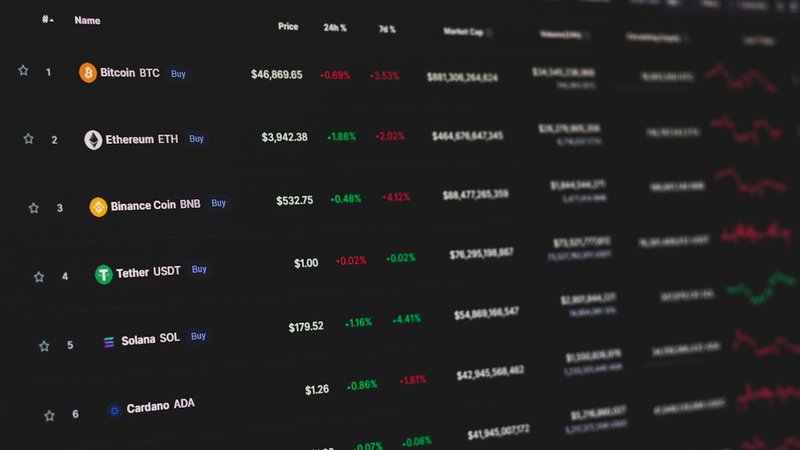
Navigating the Binance futures interface: key panels, order book, and position tab
The futures interface has four critical zones: the chart (center), the order book (right side, showing bids and asks), the order panel (where you set leverage, margin mode, and order type), and the positions/orders tab (bottom, showing open positions, conditional orders, and trade history). Spend 30 minutes clicking through every tab on testnet before touching live funds.
Choosing your order type: Market, Limit, Stop-Limit, and Post-Only explained
- Market: Executes immediately at best available price. Charges taker fee (0.05%). Use only when speed beats price.
- Limit: Executes only at your specified price or better. Charges maker fee (0.02%) if it adds liquidity. Default choice.
- Stop-Limit: Triggers a limit order when stop price is hit. Used for stop-losses and breakout entries.
- Post-Only: Cancels if the order would execute immediately as a taker. Guarantees maker fee.
Setting leverage: the specific levels beginners should use and why 20x is a trap
Binance allows up to 125x on some pairs. Use 2x-5x as a beginner. At 5x leverage on BTC, you can tolerate a 15-18% adverse move before liquidation — enough buffer to survive normal volatility. At 20x, a 4% move ends you, and BTC does 4% before lunch on a slow Tuesday.
Placing a long and a short: side-by-side walkthrough of both entry scenarios
Long example: BTC at $80,000, you expect upside. Set Isolated margin, 5x leverage, Limit order at $79,950, position size calculated from 2% risk rule. Set stop-loss at $78,400 (below recent swing low). Set take-profit at $83,200 (1:2 risk-reward). Confirm.
Short example: BTC at $80,000, you expect downside after rejection at resistance. Same settings, sell limit at $80,050, stop above resistance at $81,600, take-profit at $76,800. The mechanics are identical — only direction changes.
Attaching a stop-loss and take-profit order so your trade manages itself
Use the TP/SL checkbox in the order panel before entry, or right-click on your open position and add them after. Never have an open futures position without a stop-loss. Ever.
Noise vs signal: how to set a stop-loss that protects without triggering on wicks
Place stops beyond structural levels (swing highs/lows, key moving averages, prior consolidation ranges), not at round numbers where every retail trader places them. Hunters target obvious stop clusters. Give your stop at least 1.5x the average true range (ATR) of recent candles to avoid noise-based stop-outs.
Options Trading on Binance: Calls, Puts, Premiums, and Expiration Without the Math Intimidation
Binance Options are simpler than they appear once you strip away the jargon.
What a call option and a put option actually give you the right to do
A call option gives you the right to buy the underlying at a set price (strike) by a specific date (expiration). You buy calls when you expect price to rise above the strike. A put option gives you the right to sell at the strike by expiration. You buy puts when you expect price to fall. Maximum loss for a buyer is the premium paid — that is the entire appeal.
Premium, intrinsic value, and time value: what you are really paying for
The premium is the price of the option contract. It splits into intrinsic value (how much it is already "in the money") and time value (how much time remains and how volatile the asset is). A BTC $80,000 call with BTC at $82,000 and one week to expiry might cost $2,500 — $2,000 intrinsic and $500 time value. As expiration approaches, time value bleeds to zero.
What happens at expiration: automatic settlement, worthless expiry, and how to avoid surprise losses