SOL Futures Trading: 2026 Ultimate Guide

Table of Contents
SOL futures open interest just ripped to $5.69 billion with a 20% weekly surge, and CoinGlass data shows funding rates holding above 0.03% across major venues. That's not a quiet accumulation phase — that's leveraged money piling in, and history says one side gets flushed before the real move. About 80% of retail futures traders blow up in their first year chasing setups like this without a plan. This guide gives you the plan: the platforms, the position sizing, the exact funding-rate triggers, and the execution steps to ride the next SOL breakout without becoming exit liquidity.
SOL Futures Market Update: Open Interest Surge Signals Breakout
The SOL derivatives market is heating up faster than any major altcoin in 2026. Open interest expanding while price holds firm is a textbook compression setup — the kind that resolves with a violent move once liquidity gets thin enough on one side of the book.
What $5.69B in SOL Futures Open Interest Actually Means
Open interest is the total dollar value of unsettled SOL futures contracts across all exchanges. According to CoinGlass data, SOL futures OI climbed from roughly $4.2B to $5.69B in seven days — a 20% weekly expansion that ranks among the highest of any top-10 asset. More OI means more leveraged capital sitting in the market, which translates to bigger potential liquidation cascades in either direction.
When OI rises alongside price, that's fresh longs piling in — bullish but vulnerable. When OI rises while price stays flat or drops, shorts are stacking. Right now the data leans toward fresh longs, which is why the 3% annualized funding rate keeps creeping higher.
How to Read OI Trends Alongside Price and Volume
You never read open interest in isolation. The three-signal stack you need:
- OI up + price up + funding positive: Crowded long trade, expect a flush before continuation
- OI up + price down + funding negative: Aggressive shorts, prime squeeze setup
- OI down + price up: Short covering, often the cleanest trend moves
Bullish vs. Bearish Signals from Current SOL Derivatives Data
The current setup is mixed-bullish. OI surging plus positive but not extreme funding (under 0.05% per 8h on most venues) suggests room to run before the trade gets crowded enough to flush. Bloomberg analysts put SOL spot ETF approval odds at 70% by late 2025, which is the macro catalyst keeping bids stacked. The bearish risk: any funding spike above 0.1% per 8h historically triggers 10-15% liquidation cascades within 72 hours.
Top 7 SOL Futures Platforms Compared (Fees, Leverage, Liquidity)
Picking the wrong exchange costs you more than picking the wrong direction. A 0.05% fee difference compounds brutally if you scalp, and shallow order books on smaller venues mean you eat 0.3% slippage on a single market order. Here's how the top seven stack up.
| Platform | Max Leverage | Maker / Taker Fee | SOL Liquidity |
|---|---|---|---|
| Binance | 125x | 0.02% / 0.05% | Deepest |
| Bybit | 100x | 0.02% / 0.055% | Excellent |
| MEXC | 200x | 0.00% / 0.02% | Good |
| OKX | 125x | 0.02% / 0.05% | Excellent |
| dYdX | 20x | 0.02% / 0.05% | Good (on-chain) |
| Kraken | 50x | 0.02% / 0.05% | Moderate |
| CME | ~5x (margined) | Higher institutional | Growing |
MEXC vs. Binance vs. Bybit: Fee and Leverage Breakdown
MEXC offers zero maker fees on perpetuals and up to 200x leverage on SOL/USDT — aggressive, but the order book isn't as deep as Binance during volatile windows. Binance's SOL perpetual is the deepest pool you'll find: CoinGecko data shows SOL/USDT perp volume on Binance regularly exceeds $2 billion in 24 hours. Bybit's official documentation confirms a 0.02% maker / 0.055% taker fee with VIP tier rebates kicking in at $5M monthly volume.
For active traders, Binance and Bybit are the safest defaults. MEXC wins for low-fee scalping and the highest leverage tier if you know what you're doing.
CME SOL Futures: Institutional Access and Contract Specs
CME launched SOL futures with $12.1M in day-one volume, well below BTC's $102.7M debut and ETH's stronger start. That's not a failure — that's institutional onboarding starting slow. CME contracts are cash-settled in USD, sized at 500 SOL per contract (plus micro contracts at 25 SOL), and leverage is constrained by exchange margin requirements rather than crypto-style 100x madness. If you trade through a US prime broker or want regulated exposure for tax simplicity, CME is your venue.
OKX, dYdX, Kraken, and Gate.io: Honorable Mentions
OKX matches Binance on liquidity for SOL and has better mobile UX. dYdX is the best fully on-chain option — no KYC, transparent order books, but max leverage caps at 20x. Kraken suits US users wanting regulated perpetuals via Kraken Futures. Gate.io offers more exotic SOL-paired contracts but watch the funding rate dispersion versus the major venues.
Best Platform for Beginners Starting with $100
Start on Bybit or MEXC with $100. Both let you trade SOL perpetuals at 0.001 SOL minimum size, meaning you can risk under $1 per trade while learning. Avoid CME until you have $10K+ — contract sizes are too large for small accounts. Avoid 200x leverage entirely until you've made 100+ trades profitably at 5x or under.
Step-by-Step: How to Trade SOL Perpetual Futures Without Getting Liquidated
This is the exact workflow that separates traders who survive from traders who fund someone else's lifestyle. Follow every step.
Setting Up Your Account and Depositing Collateral
Create an account on your chosen exchange, complete KYC, enable two-factor authentication using an authenticator app (not SMS — SIM swaps are still happening in 2026). Deposit USDT via a low-fee network like Solana, Arbitrum, or BSC. For your first $100, transfer the entire amount to your futures wallet — most exchanges keep spot and futures balances separate.
Choosing Between USDT-Margined and Coin-Margined Contracts
USDT-margined contracts settle in stablecoin — your PnL is in dollars, predictable, and beginner-friendly. Coin-margined contracts use SOL itself as collateral, which means you're long SOL exposure even before opening a position. Stick with USDT-margined SOL/USDT perpetuals for at least your first year. The math is cleaner and liquidation calculations are easier to model.
Placing Your First Long or Short SOL Futures Order
On Bybit's SOL/USDT perpetual interface:
- Switch margin mode to Isolated (caps your loss to position margin only)
- Set leverage to 5x maximum for your first 20 trades
- Use Limit orders, not Market — save 0.03% per fill in fees
- Enter quantity in SOL, confirm the position value matches your risk plan
Setting Stop-Losses and Take-Profits to Protect Your Capital
Never open a position without a stop. The 1% rule: risk no more than 1% of your account on a single trade. With $100, that's $1 max risk. If your stop is 2% away from entry, your position size is $50. If your stop is 5% away, your position size is $20. Take-profit should be at minimum 2x your risk — a 2:1 reward-to-risk ratio is the floor.
How Liquidation Price Is Calculated and How to Stay Safe
Liquidation happens when your losses eat your initial margin. On a 5x isolated long at $180 SOL, your liquidation sits roughly 18-19% below entry (around $146). On 50x leverage, that distance collapses to about 1.8%. SOL routinely wicks 3-5% in minutes — meaning 50x and 100x positions get killed by normal volatility, not by being wrong on direction.
Scanning the market for setups like this manually takes hours. XeroGravity does it automatically — AI-powered signals with entry, take profit, and stop loss levels delivered to your dashboard in real time. Start free.
Advanced Strategies: Funding Rates, Long/Short Signals, and Risk Management
Once you've got execution down, funding rates become your edge. They tell you exactly where retail is overcrowded — and where the smart money is positioning against the herd.
How SOL Futures Funding Rate Impacts Your P and L
Perpetual contracts use funding payments to keep futures prices tethered to spot. On most venues, funding settles every 8 hours. If the rate is +0.03%, longs pay shorts 0.03% of their position value three times a day — that's 0.09% daily, or roughly 33% annualized. Hold a leveraged long through extended positive funding and you're bleeding fees before the trade even moves.
When to Long or Short Based on Funding Rate Extremes
Funding above +0.1% per 8h on SOL means longs are paying through the nose — historically a contrarian short signal that resolves within 48 hours. Funding below -0.05% per 8h means shorts are crowded and squeezable. The cleanest setups happen when funding hits an extreme while OI is also elevated.
Safe Leverage Levels for SOL in Current Market Conditions
SOL's 30-day realized volatility sits around 65% annualized. Translation: a single standard deviation daily move is ~3.4%. Safe leverage tiers by experience:
- Beginner (under 100 trades): 2-5x maximum
- Intermediate (100-500 trades): 5-10x with strict stops
- Advanced (500+ trades, profitable): 10-20x situational
- 50x+: Only for scalp entries with sub-1% stops, then de-leverage immediately
Position Sizing Rules for High-Volatility Solana Trades
The formula: Position size = (Account × Risk %) ÷ (Stop distance %). With a $1,000 account, 1% risk, and a 3% stop on SOL, your position size is $333 worth of SOL — regardless of what leverage the exchange offers. Leverage just determines margin required, not risk exposure. This is the lesson 80% of liquidated traders never learn.
Hedging SOL Spot Holdings with Perpetual Short Positions
If you hold 100 SOL in cold storage and expect a 10-15% pullback without wanting to sell, open a perpetual short equal to 50-100% of your spot value. You pay funding if rates are positive, but you protect downside. XeroGravity identified this exact hedge setup ahead of the last major SOL correction — view the signal result here.
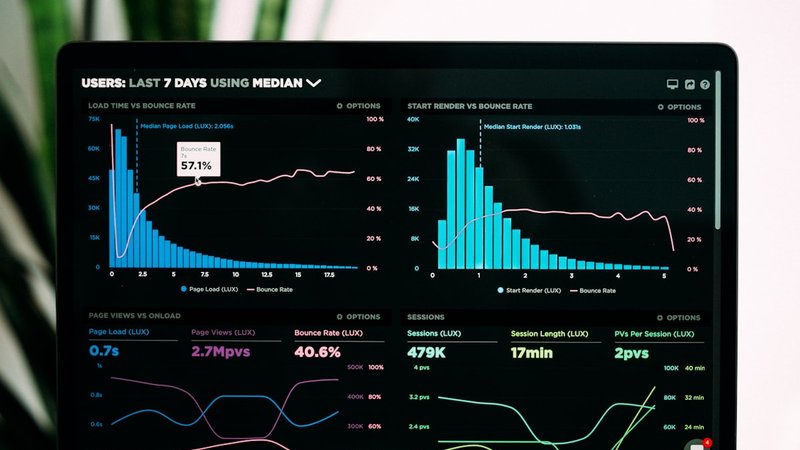
Real-time SOL long/short signals with funding-aware entries help you avoid the crowded trades that liquidate retail. Get XeroGravity AI signals free.
SOL vs BTC and ETH Futures: CME Data and ETF Outlook
Solana's derivatives growth curve is steeper than either BTC or ETH at the same market cap stage. That's the asymmetric setup institutional desks are pricing in.
CME SOL Futures vs BTC and ETH: Launch Performance and Volume
CME SOL day-one volume hit $12.1M against BTC's $102.7M launch back in 2017 and ETH's stronger debut. Lower in absolute terms — but SOL launched into a more mature institutional environment with established crypto futures infrastructure. The growth trajectory matters more than the opening print.
Why SOL Futures OI Is Outpacing Legacy Assets
SOL futures OI is growing roughly 3-4x faster than BTC futures OI on a percentage basis in 2026. Three drivers: spot ETF anticipation, network throughput narrative dominance over Ethereum, and the fact that SOL is small enough relative to BTC that institutional allocations move the needle more.
Spot SOL ETF Approval: What It Means for Futures Traders
Bloomberg analysts assign 70% odds to spot SOL ETF approval by late 2025. Approval typically triggers a 20-40% spot rally and significant basis trade compression as authorized participants arbitrage between spot and futures. Position for this by holding small spot exposure plus a leveraged futures long sized to your risk tolerance.
Basis Trading Opportunities Between Spot and Futures Prices
When SOL quarterly futures trade at a 8-12% annualized premium to spot, you can long spot SOL and short the dated future for risk-free yield until expiry. This basis trade is how institutional desks farm crypto volatility without directional exposure. Requires $25K+ to be worth the operational complexity.
The Bottom Line on SOL Futures in 2026
SOL futures open interest at $5.69 billion with a 20% weekly surge is the kind of signal that prepared traders capitalize on and reckless ones get vaporized by. Your edge isn't predicting the next 10% move — it's executing with the right platform, sane leverage, funding-rate awareness, and stops that fire before the exchange liquidates you. Combine that discipline with real-time AI-driven signals and you stop being the 80% and start being the 20% who actually compound their accounts.
Frequently Asked Questions
Binance and Bybit lead for SOL perpetual futures because of deep liquidity, tight spreads, and competitive fees around 0.02% maker / 0.055% taker. MEXC is best for low-fee high-leverage trading up to 200x, while CME is the institutional choice for regulated exposure. Beginners with $100 should start on Bybit or MEXC.
2-5x leverage is safe for beginners trading SOL futures, given SOL's 65% annualized volatility and frequent 3-5% intraday wicks. Intermediate traders can move to 5-10x with strict stops, and only experienced profitable traders should consider 10-20x. Leverage above 50x typically results in liquidation within hours from normal market noise.
High SOL futures open interest at $5.69B with 20% weekly growth signals strong leveraged conviction and sets up a volatile breakout. If OI rises alongside positive funding rates, longs are crowded and a short-term flush is likely before continuation. If OI rises while funding stays neutral, the move is healthier and more sustainable.