What Is a Meme Coin? The Attention Market Explained


Meme coins are not just jokes — they are attention markets disguised as tokens, and that is why some explode while most vanish. Strip away the dog logos, the frog PFPs, and the ironic tickers, and what you are left with is a pure speculation vehicle where cultural momentum replaces cash flow, and where the only thing being priced is how many people are watching right now.
That is why the honest answer to what is a meme coin is not "a cryptocurrency based on a meme." It is a token whose entire value depends on collective attention — and once attention leaves, so does the price. Understanding that one idea changes how you look at every launch, every KOL call, and every chart.
What Is a Meme Coin?
A meme coin is a community-driven cryptocurrency token created around an internet meme, viral trend, cultural moment, or inside joke — with no whitepaper promising utility, no roadmap targeting real revenue, and no serious claim to solving a technical problem. The token is the culture. That is the whole product.
The difference between a meme coin, a meme token, and a social-sentiment altcoin
People use these terms interchangeably, but they are not the same. A meme coin is usually its own token on a chain like Solana, Ethereum, or Base, launched purely around a joke or character. A meme token often refers to the same thing but can include community-run forks or reissues of an existing meme. A social-sentiment altcoin is broader — think AI narrative plays or political-event tokens that ride news cycles but wrap themselves in some thin utility story. Meme coins skip the pretense.
Why meme coins are classified separately from Bitcoin, Ethereum, and utility altcoins
Bitcoin is monetary infrastructure. Ethereum is a settlement layer for applications. Utility altcoins pitch specific problems — oracles, storage, restaking, DePIN. Meme coins pitch nothing. They exist to be traded. That is not a criticism — it is a category. Once you accept the category, you stop asking the wrong questions ("what does this token do?") and start asking the right ones ("who is buying, and how long will they keep buying?").
How meme coins are created: from internet joke to on-chain token in minutes
On Solana, a launchpad like Pump.fun lets anyone create a token in under 60 seconds for a fraction of a SOL. On Base, platforms like Zora and Clanker do the same. There is no code audit, no team KYC, no fundraising round. Someone screenshots a tweet, mints a token, drops a Telegram link, and the market decides in real time whether it lives or dies.
How Meme Coins Work
The mechanics behind memecoin explained properly come down to three things: liquidity, supply, and attention flow. Traditional finance values assets on discounted cash flows. Meme coins value themselves on how many wallets are net-buying in the next 30 minutes.
Why meme coins can gain value with zero utility
How meme coins gain value is straightforward once you stop looking for fundamentals. Price goes up when more capital enters the liquidity pool than leaves it. That capital enters because someone believes attention on the token is growing — a KOL is about to call it, a celebrity tweeted the meme, volume is spiking on DexScreener. The token itself does nothing. The bet is on the crowd's next move, not on the asset.
The role of liquidity pools, token supply, and early wallet concentration
Every meme coin trades against a liquidity pool — usually paired with SOL, ETH, or a stablecoin. Small pools mean huge slippage and huge volatility. A token with $30k in liquidity can 10x on $8k of buys and dump 90% on a single $15k sell. Supply matters too: a 1 billion supply meme coin at a $50k market cap has a per-token price that psychologically feels "cheap," which fuels retail entries. And wallet concentration is where most rugs start — if the top 10 wallets hold 40% of supply, you are trading against them, not with them.
How smart-money wallets and KOL calls accelerate or collapse price action
A single wallet with a proven track record buying a fresh launch can drag hundreds of copy traders into the same token within seconds. XeroGravity flagged one such wallet's first buy on a Solana meme coin in August that ran 42x in under two hours — see live KOL and wallet signals here. The same dynamic works in reverse: when that wallet exits, the copy traders exit, and the chart collapses faster than it pumped.
Why Meme Coins Go Viral
Most meme coins die within 48 hours. A handful survive weeks. A tiny fraction become cultural fixtures. Understanding the lifecycle helps you know which stage you are entering — and whether you are the early buyer or the exit liquidity.
The meme coin lifecycle: launch, viral spike, distribution, and fade
Stage one is launch: token deploys, insiders and snipers accumulate in the first blocks. Stage two is the viral spike — a call goes out, volume explodes, market cap runs from $30k to $2M in an hour. Stage three is distribution: early buyers and insiders sell into the retail wave, often disguised by continued upward price action. Stage four is the fade — volume dries up, holders are underwater, and the chart bleeds sideways-down for weeks until it flatlines.
What made Dogecoin survive when thousands of copycats disappeared
Dogecoin launched in 2013 as a joke fork of Litecoin. It survived for reasons no copycat has replicated: a genuinely early mover advantage, a friendly community that resisted maximalism, and — most importantly — repeated cultural revival moments (Elon Musk tweets, tipping culture on Reddit, Robinhood accessibility). According to CoinGecko data, Dogecoin has held a top-20 market cap position for most of the past five years, something no PEPE or WIF competitor has managed. Longevity in meme coins comes from becoming a symbol, not a token.
How celebrity endorsements, influencer calls, and social platforms fuel meme coin momentum in 2026
In 2026, virality moves through fragmented channels: X posts, Telegram groups, Farcaster casts, TikTok clips, and private KOL Discords. A single well-timed post from an account with 500k+ followers can add $10M to a market cap in minutes. The catch is that most of those posts are paid, and the KOL is already positioned to sell into the wave they just created.
Meme Coin Risks and Red Flags
The meme coin vs cryptocurrency comparison collapses when you look at risk profile. Bitcoin drawdowns are measured in months. Meme coin drawdowns are measured in minutes. Here is how to spot the traps before you become the exit liquidity.
Classic pump-and-dump patterns and how to recognize them on-chain
The textbook pump-and-dump looks like this on a chart: a slow accumulation phase with low volume, followed by a sharp vertical spike as coordinated buys hit, then a plateau of a few minutes to hours where insiders quietly distribute to retail, then a cliff drop of 60-95% as the coordinated group exits together. On-chain, you will see the same handful of wallets that bought in the first 5 minutes selling in size once the market cap hits their pre-agreed target.
Warning signs: anonymous teams, locked liquidity myths, and bot-inflated communities
- Anonymous team with aggressive marketing — normal for meme coins, but combined with paid influencer spam it signals a coordinated exit plan.
- "Liquidity locked" claims without a verifiable lock contract — always click through to the actual lock transaction on Solscan or Etherscan.
- Telegram groups with 20k members but 6 messages per hour — bot-inflated. Real communities are loud and chaotic, not silent.
- Holder count that grew 10,000+ in an hour — airdrop wallets, not organic buyers.
How to use wallet trackers and KOL call history to assess manipulation risk
Every serious meme coin trade starts with two questions: who is buying, and who has been right before? Wallet trackers let you see whether smart-money addresses are entering or exiting a token in real time. KOL call history tells you whether the person hyping this coin has a 12% win rate or a 68% one. You can check any caller's real track record on the XeroGravity KOL leaderboard before you copy a single trade.
Watching every KOL channel and smart-money wallet by hand is a full-time job. XeroGravity does it for you — live KOL and wallet signals with win rates, one-click buys, and autopilot with take profit and stop loss on Solana and Robinhood chain. Start free.
Examples of Meme Coins and How They Compare
Looking at real meme coins across eras shows you what survival, failure, and manipulation actually look like on-chain — and helps you calibrate what you are staring at when the next launch hits your feed.
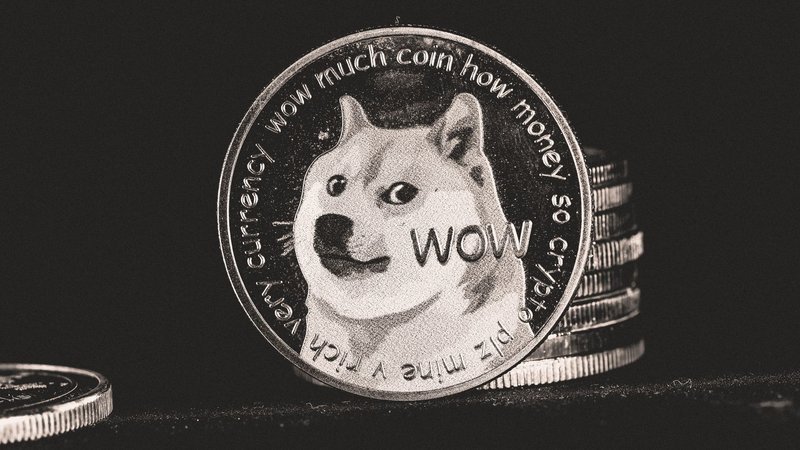
Dogecoin: the original meme coin and why it became a cultural asset
Dogecoin is the benchmark. It was never designed to solve a problem. It became payment-accepted by Tesla, listed on every major exchange, and treated as a legitimate cultural asset. Its survival proves that the winners in this category are not the technically best tokens — they are the ones that transcend the token and become symbols.
Shiba Inu, PEPE, and the second-wave meme coin playbook
Shiba Inu launched in 2020 as "the Dogecoin killer" and hit a $40B+ market cap at its 2021 peak according to CoinMarketCap data. PEPE launched on Ethereum in 2023 and did a 7,000x from launch to peak within weeks. Both followed the same playbook: viral origin, exchange listings that provided exit liquidity, and eventual multi-year decline once the culture moved on.
Solana and Robinhood chain meme coins in 2026: speed, volume, and new risks
| Feature | Solana meme coins | Robinhood chain meme coins |
|---|---|---|
| Launch speed | Under 60 seconds via Pump.fun | Instant via native launchpads |
| Typical liquidity depth | Deeper — mature ecosystem | Thinner — newer chain |
| Rug risk | High — 99%+ of launches fail | High — same dynamics apply |
| Best for | High-volume scalpers and snipers | Retail-friendly entry and mobile trading |
Meme Coins Are Attention Markets — Trade Them That Way
Meme coins are not scams by default and not lottery tickets by default. They are attention markets, and attention is a real, tradeable, measurable resource — if you have the tools to measure it. The traders who consistently profit are not the ones with the best takes on which dog will win. They are the ones with the fastest signals, the tightest risk management, and the discipline to sell into strength when everyone else is buying tops.
Frequently Asked Questions
Meme coins are speculative trades, not investments. They can produce extreme returns in short timeframes, but the vast majority lose most of their value within weeks. Treat them as high-risk positions with strict position sizing and pre-defined exits, never as long-term holdings.
A regular cryptocurrency like Bitcoin or Ethereum has technical purpose — monetary infrastructure, smart contract settlement, or a specific utility. A meme coin has no utility claim; its value comes entirely from community attention, cultural relevance, and speculation. Meme coins are also far more volatile, often moving 50%+ in a single hour.
Dogecoin launched in December 2013 as a joke fork of Litecoin based on the Shiba Inu "doge" internet meme. It was the first cryptocurrency built purely around a meme rather than a technical mission, and it remains the largest and most culturally recognized token in the category, making it the reference point every meme coin since has been measured against.