Crypto Drawdown Management: A Practical Guide

Table of Contents
Most crypto content tells you how to make money in bull markets. This guide shows you how to stay solvent, protect capital, and keep your best ideas alive when the market drops 30% to 70% and correlation spikes across every coin you own.
Crypto drawdown management is the discipline that separates traders who survive multiple cycles from those who blow up in a single weekend. The frameworks below come from how institutional desks actually run risk — adapted for the realities of 24/7 markets, leverage cascades, and altcoins that bleed twice as hard as Bitcoin on the way down.
What Crypto Drawdown Management Actually Means
Drawdown is the most honest number in your portfolio. It tells you exactly how much pain you have already absorbed and how much further the wound can go before you are forced out.
Maximum drawdown defined: peak-to-trough loss in plain language
Maximum drawdown is the largest percentage loss from a portfolio peak to its lowest point before a new peak is made. If your account hit $100,000 in March and bottomed at $58,000 in June, your max drawdown was 42%. Simple. Brutal. The number you should be tracking weekly.
Why drawdown matters more than return in crypto markets
Returns are vanity. Drawdowns are survival. A 50% drawdown requires a 100% gain just to break even. A 70% drawdown — common in altcoins — needs a 233% recovery. The deeper the hole, the more mathematically improbable the climb out. That is why professional risk desks obsess over maximum drawdown crypto exposure long before they think about upside.
Reactive versus proactive drawdown management
Reactive management means you panic-sell at the bottom after watching your portfolio bleed for weeks. Proactive management means you defined your exit triggers, position sizes, and hedge levels before the selloff started. One ends in regret. The other ends with capital intact and dry powder ready.
Why Crypto Drawdowns Are Different From Stock Market Drawdowns
Equity drawdowns are slow and cushioned by circuit breakers, market makers, and overnight closes. Crypto offers none of that. The structural differences make crypto risk management a fundamentally harder problem.
24/7 markets, leverage cascades, and liquidation spirals
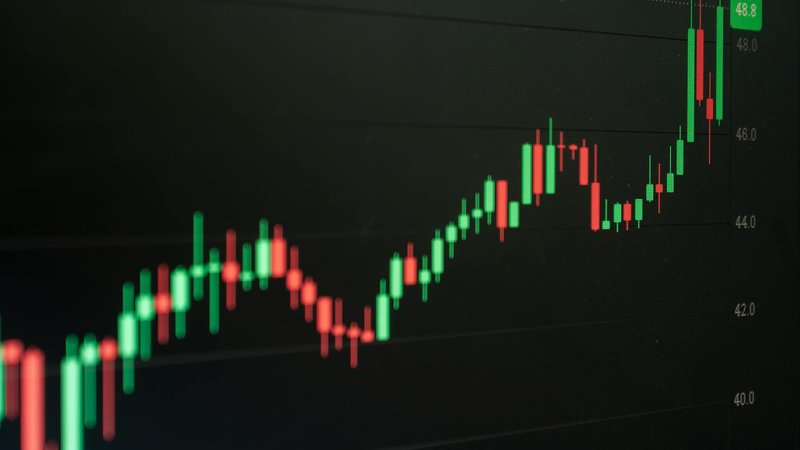
You sleep. The market does not. A leverage flush in Asian hours can wipe 15% off BTC before US traders even wake up. According to CoinGlass data, single-day liquidation events have exceeded $2 billion multiple times across 2024 and 2025, and those forced sellers create the air pockets that turn a 10% correction into a 30% rout.
How BTC selloffs cause altcoins to fall harder and faster
Altcoins have downside beta of 1.5x to 3x against Bitcoin. When BTC drops 20%, expect mid-caps to drop 35% to 50% and small-caps to drop 60% or more. Liquidity evaporates first in the smallest tokens, so the same dollar of selling pressure moves price much further.
Crypto-specific risks: liquidity cliffs, token unlocks, exchange insolvency, and stablecoin depegs
Traditional markets do not have cliff vesting unlocks that dump 10% of supply on a single date. They do not have exchange insolvency risk where your collateral vanishes overnight. They do not have stablecoins that can depeg 30% in an afternoon. Every one of these is a real failure mode that has played out in the last three years, and your drawdown framework has to account for them.
Why correlation spikes to 1.0 exactly when diversification is needed most
Holding 15 different altcoins feels like diversification until the day BTC drops 15% and every single one of them is down 25%. Correlation in crypto converges to 1.0 during selloffs. Real diversification requires assets that are structurally uncorrelated — stablecoins, cash, short positions, or put options — not just different tickers.
A Simple Framework for Setting Max Loss Limits and Risk Budgets
If you do not define your maximum acceptable loss before the trade, the market will define it for you. Here is the framework professional desks use, stripped to its essentials.
How to set a personal maximum drawdown threshold by account type
Your max drawdown threshold depends on your account purpose. Long-term spot holding can tolerate 40% to 50% drawdowns if the thesis holds. Active swing trading accounts should cap at 20% to 25%. Leveraged futures accounts must cap at 10% to 15% — beyond that, the math of recovery becomes punishing.
Defining per-position and per-sector risk budgets
No single position should be able to lose more than 2% of total account equity on its stop. No single sector — L1s, DeFi, AI tokens, memes — should exceed 25% of the portfolio. These are not suggestions. They are the guardrails that keep one bad call from becoming a portfolio-ending event.
Rebalance triggers and circuit breakers: when to cut size automatically
Set hard rules:
- Down 10% from peak: reduce leverage by half
- Down 15% from peak: rotate 25% of risk assets into stablecoins
- Down 20% from peak: stop opening new positions for 7 days
- Down 25% from peak: full review, no new risk until written re-entry plan exists
How much drawdown is too much before you must reduce risk
The honest answer: any drawdown that triggers emotional decision-making is already too much. Mechanically, once you exceed 15% from peak, every additional percentage point compounds the recovery requirement non-linearly. That is the zone where discipline matters most and where most retail accounts make their fatal mistakes.
How to Reduce Drawdown With Position Sizing, Stop-Losses, and Rebalancing
Position sizing crypto correctly is the single highest-leverage skill in this business. Most blowups are not analysis failures — they are sizing failures.
Position sizing rules: fixed fractional, volatility-adjusted, and Kelly-based approaches
Three methods, ranked by sophistication:
- Fixed fractional: risk a constant percentage (1-2%) of account equity per trade. Simple, effective, hard to mess up.
- Volatility-adjusted: size positions inversely to the asset's ATR. A token with 8% daily ATR gets half the size of one with 4% ATR.
- Kelly-based: size based on your edge and win rate. Powerful, but most traders overestimate their edge and over-bet. Use fractional Kelly (quarter or half) if you go this route.
Setting stop-losses in crypto: ATR-based exits and volatility bands
Forget fixed-percentage stops. Crypto volatility ranges too widely. Use ATR-based stops — typically 2x to 3x the 14-day ATR below entry for longs. This places your stop outside normal noise but still cuts you out before a structural break.
Rebalancing during drawdowns without catching a falling knife
Do not add to losers based on price alone. Add only when the structural thesis is intact and price has stabilized — typically after a 3-day consolidation above a higher low. Otherwise you are averaging down into a trend that has further to fall.
Managing drawdown differently across spot, leveraged, and DeFi positions
Spot allows you to ride deep drawdowns if your time horizon is years. Leverage does not — funding rates and liquidation prices force you out. DeFi positions add smart contract risk, oracle risk, and impermanent loss on top of price risk. Size each book separately and never let DeFi exceed 15% of total crypto exposure.
Scanning the market for setups like this manually takes hours. XeroGravity does it automatically — AI-powered signals with entry, take profit, and stop loss levels delivered to your dashboard in real time. Start free.
Crypto-Specific Tools and Hedges for Managing Downside Risk
Crypto portfolio hedging is no longer just "sell and hold stables." You have a full toolkit now, and each instrument fits a different scenario.

| Hedge Tool | Best Use Case | Main Drawback |
|---|---|---|
| Stablecoin rotation | Quick risk-off, simple execution | Depeg and issuer risk |
| Short perpetual futures | Active hedging with leverage | Negative funding bleed |
| BTC/ETH put options | Defined-risk tail protection | Premium cost, theta decay |
| Cash (fiat) | Zero crypto correlation | Slow re-entry, off-ramp friction |
Stablecoin rotation: the simplest hedge and its hidden risks
Rotating into USDT or USDC is the default move, but you are still inside the crypto ecosystem. Diversify across at least two stablecoins and avoid keeping everything on a single exchange.
Short futures and perpetuals: managing funding rate costs during hedges
Shorting BTC perps to hedge spot exposure works, but funding rates can cost 0.01% to 0.1% every 8 hours. Over a month-long hedge, that compounds. Check funding before opening — if shorts are paying longs, your hedge is cheap. If longs are paying shorts heavily, find another tool.
Put options on BTC and ETH: cost, timing, and sizing for portfolio protection
Buy puts when implied volatility is low — typically during quiet markets, not after a crash has started. A 5% to 10% out-of-the-money put with 30-60 days to expiry on Deribit can hedge a meaningful chunk of portfolio risk for 1-3% of notional. That is cheap insurance when you sense regime change.
When to go to cash versus hold through volatility
Go to cash when the macro regime breaks — Fed pivots hawkish, credit spreads widen, BTC loses its 200-week moving average. Hold through volatility when nothing structural has changed and you are just facing normal cycle noise.
Drawdown Recovery Planning: How to Rebuild After a Major Loss
Surviving the drawdown is half the battle. Rebuilding without compounding mistakes is the other half.
How to calculate how much gain you need to recover from a drawdown
The formula: required gain = 1 / (1 - drawdown %) - 1. A 30% drawdown needs 43% to recover. A 50% drawdown needs 100%. A 60% drawdown needs 150%. Pin this math to your screen.
Re-entry criteria: market signals and internal conditions before adding risk
Do not re-enter on hope. Require objective signals: BTC reclaiming a major moving average, funding rates resetting to neutral, open interest washing out. Internally, require that you have not made an emotional trade in the past 14 days. Both conditions must be met.
Rebuilding the portfolio in stages: sequencing and scaling back in
Re-enter in tranches. Deploy 25% of intended risk on the first signal. Add another 25% if the trend confirms over the next two weeks. Scale to full size only after the new uptrend has held a higher low. This sequencing protects against false breakouts that historically trap recovery buyers.
Avoiding revenge trading and psychological traps after large losses
The biggest mistake after a drawdown is trying to win it all back in one trade. Cut your standard position size in half for the first 30 days after recovery begins. Your job is not to recoup losses fast — it is to compound surviving capital without taking another hit.
The traders who compound across cycles are the ones who treat crypto drawdown management as the core skill, not an afterthought. Pre-defined limits, sized positions, layered hedges, and a written recovery plan are what keep capital and conviction intact when the next 60% selloff arrives. According to CoinGecko data, every bull market in crypto history has been preceded by a drawdown that wiped out the majority of leveraged participants — survival itself is the edge.
Frequently Asked Questions
A reasonable maximum drawdown threshold for an active crypto trading account is 20-25%, while long-term spot holders can tolerate 40-50% if their thesis is intact. Leveraged futures accounts should cap maximum drawdown at 10-15% because recovery math becomes punishing beyond that level.
Reduce leverage first, rotate a portion of risk assets into stablecoins or cash, and add defined-risk hedges like BTC put options or short perpetual futures. Pre-define circuit breaker levels — for example, cutting exposure by 25% once the portfolio drops 15% from peak — so decisions are mechanical rather than emotional.
Yes, but use volatility-adjusted stops rather than fixed percentages. ATR-based stops set 2-3x the 14-day average true range below entry place your exit outside normal noise while still protecting against structural breakdowns. Fixed percentage stops get hunted constantly in crypto's high-volatility environment.